I like to preface this personal article with a simple statement: to have a long, satisfying career, you need to love what you do. I also confide that I am not a self-help guru.
Let me start with my story. Except for the first nine years of my career, I can confidently say that I have loved my jobs. It was never planned, I never had a dream job in my mind, nor did I have any idea of what I loved. But now, when I look back and remember various incidents, I do get that incredible feeling as to how much I was in love with my job. I still am, and I continue to love what I am doing. To be honest, it feels strange to write about self. The only other time I have written about myself was when I wrote a blog about an incident that changed my way of looking at leadership, titled “Leading from Behind” [1]. This time, I thought of writing because I believe I’ve come across a theory that can explain why I enjoyed my jobs.
I just finished the first semester of my coursework in pursuit of my PhD. I wanted to research new dimensions that can help me learn something new. I thought that bringing my extensive experience in the sustainability space and expanding my knowledge in psychology and mindsets might be a good fit for collaboration. The idea was to explore ways to motivate humanity towards sustainability. I’m not sure whether I will continue my work in that space, but it was while reading through theories that explained what motivates people that I came across Self-Determination Theory (SDT), developed by Edward L. Deci and Richard M. Ryan.
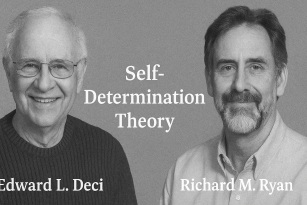
Self-Determination Theory is one of the most influential theories of motivation, which emphasises intrinsic motivation and how these three basic psychological needs lead to higher well-being.
Autonomy – the need to feel in control of oneself.
Competence – the need to gain mastery and feel effective in one’s activities.
Relatedness (Connection) – the need to feel connected and belong.
SDT was first introduced in the 1980s. One of the most pivotal early moments in this research was Deci’s seminal experiment, which involved a puzzle-solving task. Participants were asked to solve puzzles over several sessions. One group was paid to solve puzzles, while the others were not. On a break, Deci observed something unique. The unpaid participants continued to solve the puzzle even during breaks, in contrast to the paid participants. This showed that motivation was more intrinsic and was in contradiction to some of the behaviourist models of that time.
Reading more into this theory started to explain why I loved what I did over the last two decades. I felt my work fulfilled the three core needs of SDT.
Relatedness (Connection) – I was (and am) part of something meaningful. More than just working, I have dedicated myself to the world of sustainability since completing my Master’s degree in Environmental Science and Engineering. It was never planned; I just happened to be taking this course. However, growing up in the foothills of the Western Ghats, there was a connection that was further strengthened by this course. The relatedness further got ingrained through the connections I made, the people I met, the people I listened to, the people’s work that I read and most importantly, the people I worked with. The ecosystem around me reinforced the connection I have with what I am doing. I was sure that I was doing something meaningful.
Competence – I had confidence that I could do it. There are multiple reasons for this confidence. In hindsight, it is possible because I entered the space at a time when it was just gaining momentum and witnessed many things happening firsthand. Competence is also a result of continuous upskilling, and I have been very focused (and still am) on learning new dimensions of my subject space. It is not just learning, but applying what you have learned, that has helped me. I recently wrote that there is no threshold to define competency; it is always relative to the individual. It needs sharpening all the time. I always believed that the more I practice, the sharper my competency will be. I made genuine efforts to maintain my competency among the leads, which gave me the confidence and satisfaction in my work.
Autonomy – I had freedom and ownership. This should not be confused with being independent or self-reliant. For me, autonomy is about the freedom to make my choices, be accountable for those choices and of course, aligned with the values and interests of stakeholders and institutions. It is not going alone, but autonomy for me is about when people around me support the choices I make. I have always felt trusted and never got the feeling of being micromanaged. You get a huge boost when your senior says that you are the least maintenance person I have come across. I should admit that it has a portion of luck to have seniors and a team that believes in your choices and decisions, not blindly, but constructively. When we feel in control of our choices, we are more motivated, which is what I have felt.
Over the last two decades, I have never sat across from an annual appraisal, nor I had lengthy discussions to finalize performance metrics for myself. I am not saying that it is the right approach, and I have always said to my team that those are individual choices and circumstances. My circumstances allowed me to have that luxury and trust, which stemmed from my love for what I was doing. Having said that, I was busy, stretched, and under pressure, but I also felt relaxed, content, active, and close. I loved what I did and still love what I am doing.
As I re-enter the academic world, I find myself among theories again. The theories that help us make sense of the complex world. They provide possible reasons that help explain relationships, patterns and behaviors. I loved it when there was a theory that explained why I loved what I am doing.
The moment I went through SDT, it explained what motivated me and made me love what I am doing. Although it explains intrinsic reasons, let me tell you that with out those people and institutions around me, it would not have been possible. I came across this theory and applied it to what already happened to me. The reason why I shared this is because it is possible for some one to use this theory and plan their way as well. Hoping so……
