In 1991, as part of my bachelor’s degree in engineering, I wrote a paper on Neural Networks and Artificial Intelligence. The inspiration was The Terminator.
The film presented a machine intelligence capable of pursuing objectives and adapting to its environment, resembling humans in its capabilities but seemingly devoid of human emotions. Arnold Schwarzenegger was, quite literally, the perfect embodiment of the idea. As an engineering student, I found the possibility fascinating. Could we build machines that replicated aspects of human intelligence? And what would happen if we did?
More than three decades later, I find myself returning to a question that perhaps I should have asked then.
Why did we assume that human intelligence should be the gold standard for artificial intelligence?
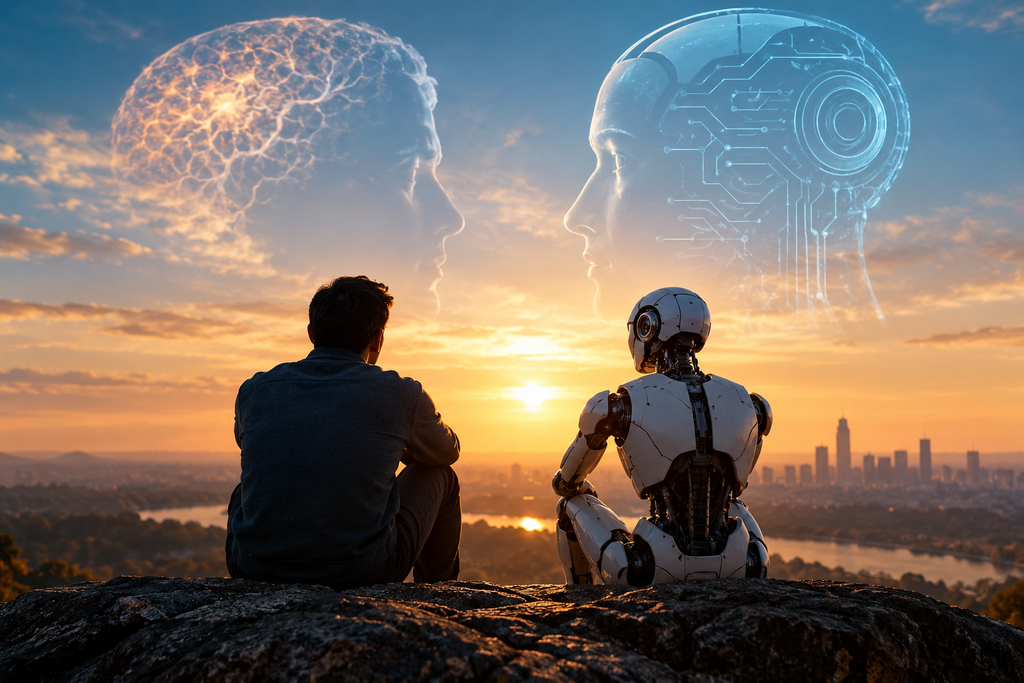
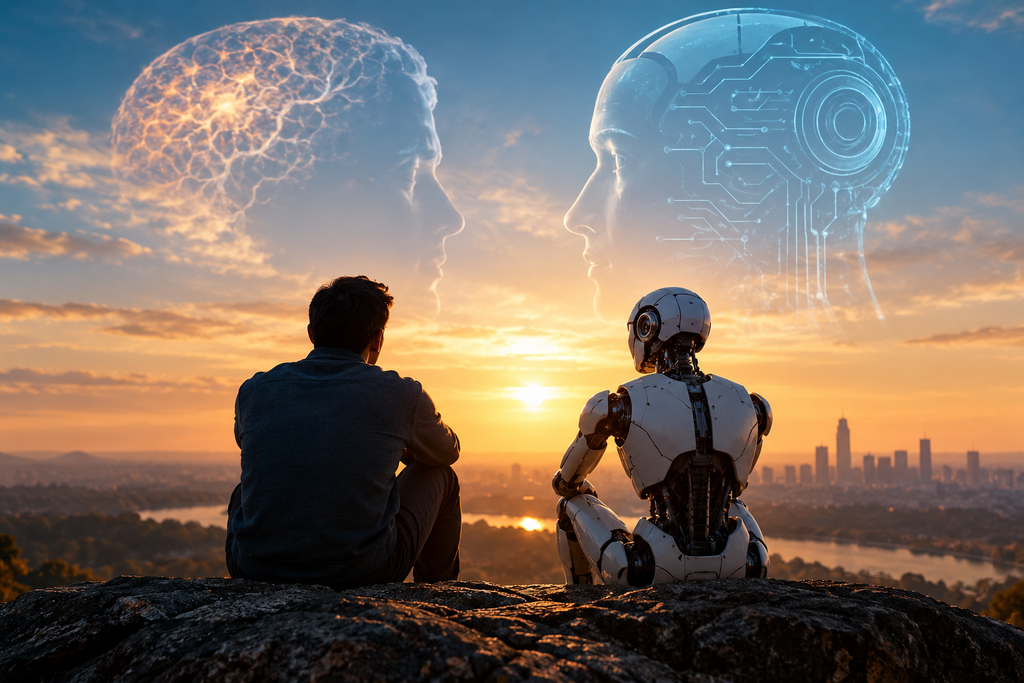
Was it because human intelligence was the most familiar model available to us? Or was there something more deeply humane at work? Perhaps, in trying to create artificial intelligence, we were looking for an intellectual sibling: a machine that could think like us, reason like us and solve problems like us, even if it did not feel like us.
I like to call this the Sibling Camaraderie Hypothesis.
The Sibling Camaraderie Hypothesis
Perhaps we can understand our preference for human-like intelligence through three related tendencies.
First, familiarity. Human intelligence is the form of intelligence we know best. We experience our own thinking, reasoning and learning, and we can observe these capabilities in others. When we attempt to create something intelligent, it is natural to begin with what we understand. Human intelligence becomes our reference point, not necessarily because it is the best possible model, but because it is the most accessible one.
Second, anthropocentrism. We tend to place humans at the centre of our understanding of the world. We interpret nature through human experience and evaluate capabilities against human standards. When it comes to intelligence, we often ask whether a machine can write like us, reason like us, create like us or solve problems as we do. But what if intelligence can take forms that do not resemble human cognition at all? By insisting on human-centred benchmarks, we might be overlooking possibilities.
Third, intellectual kinship. Perhaps we are more comfortable recognising intelligence when it resembles our own. We look for reasoning, language, creativity and problem-solving in forms we recognise as human-like, almost as though we are searching for an intellectual sibling. We may want machines to be different enough to extend our capabilities, yet similar enough for us to understand and relate to them.
These three tendencies are not mutually exclusive, nor do they establish why AI researchers historically chose particular approaches. They are prompts for questioning an assumption that often goes unexamined.
Are we trying to create the best possible intelligence, or are we trying to create intelligence that reminds us of ourselves?
But is human intelligence really the gold standard?
Human intelligence is extraordinary. It has enabled scientific discoveries, artistic expression, technological progress and the development of complex societies. It is understandable that we have looked to ourselves for inspiration in building intelligent machines.
Yet human intelligence is also deeply imperfect.
We are susceptible to cognitive biases, emotional reasoning, selective attention and overconfidence. We frequently interpret information in ways that reinforce our existing beliefs. We confuse familiarity with truth, confidence with competence, and accumulated knowledge with wisdom.
Our ability to reason does not prevent us from making irrational decisions. Access to information does not guarantee sound judgement. Experience does not necessarily protect us from repeating mistakes.
If this is the intelligence we are trying to emulate, should we not pause to examine the benchmark itself?
From engineering to philosophy and management
When I wrote my paper in 1991, AI was largely an engineering subject in my experience. The focus was on whether machines could simulate aspects of intelligence and how we might make that possible.
Today, AI has shifted from what machines can do to what humans should do.
That shift is profound. If machines can do much of our cognitive work, what will distinguish one person’s contribution from another’s?
This is no longer a technological question.
The engineering challenge was to build machines that could demonstrate intelligence. The philosophical challenge is to understand what intelligence means. The management challenge is to decide how to use it responsibly.
And if we insist on making machines think like humans, are we inadvertently reproducing not only our strengths, but also our limitations?
Perhaps the real opportunity is not to create an intellectual sibling, but to develop forms of intelligence that complement ours in ways we have yet to fully understand.
What if the purpose of artificial intelligence is not to create something that thinks like us, but to help us discover ways of thinking that we could never have imagined on our own?
